Industries
Veterinary clinics clean enough for nervous pets and their people.
Veterinary clinic cleaning in the Bay Area and Sacramento: lobbies, exam rooms, treatment and surgery areas, wards and staff spaces, cleaned to your clinic’s protocol.
A clinic that works hard all day.
Over one ordinary day, an animal hospital’s lobby tile collects muddy paw prints, a cat carrier dragged across the bench, fur drifting under every chair and at least one accident near the front desk. Clients notice all of it the next morning, usually while they are already worried about the animal on the other end of the leash.
Fieldstone resets the clinic after the last appointment, so the lobby looks and smells fresh when the doors open and the clinical rooms are ready for the first case. The plan follows your clinic’s own protocol from front door to back hallway.
Lobby, scale and the front counter.
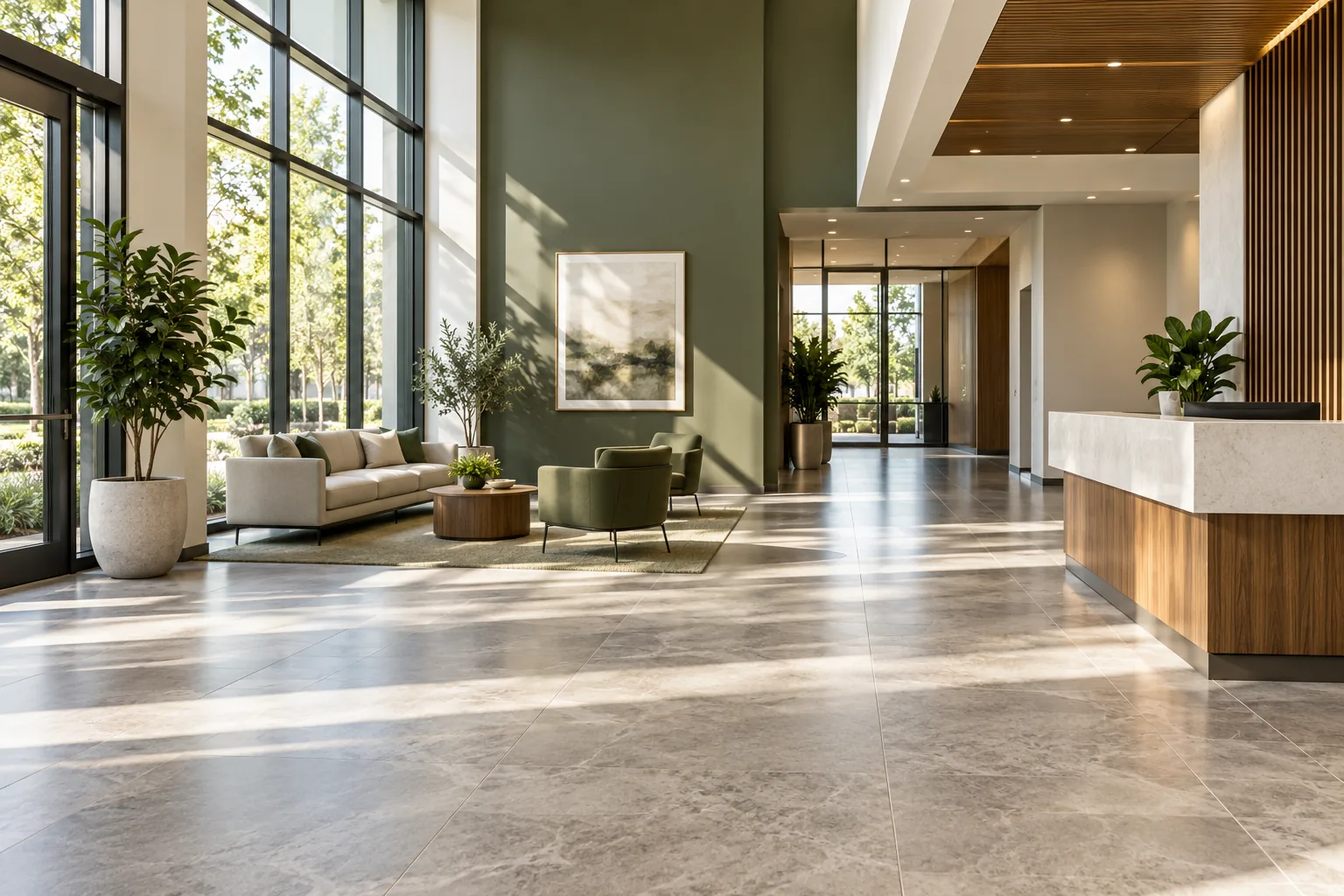
The lobby takes the heaviest beating. Crews vacuum and mop the whole waiting area, wipe benches, chair frames and the base of the front counter where dogs lean and sniff, clean the scale platform and entry glass at nose height, and empty and wipe the pet-waste station by the door. Clinics that separate dog and cat seating get both sides done in turn.
Retail shelves, the check-out counter and the card reader are dusted and wiped. Client and staff restrooms get fixtures, mirrors and floors done, with paper and soap topped up. For clinics that want the lobby kept in shape through a busy day, a day porter can handle accidents, floors and restrooms between appointments.
Exam rooms, treatment and surgery.
Clinical rooms are cleaned the way your clinic writes it down. Exam tables, counters, sinks, door handles and light switches follow the order your protocol sets, and treatment and surgery suites can be put on a full terminal clean on whatever nights you book one. Crews apply EPA-registered disinfectants and leave the surface wet for the full contact time the label lists before wiping, rather than spraying and drying straight away.
Everyone on the crew has bloodborne-pathogen safety training and HIPAA-aware training. In a clinic, that means patient charts, client files, whiteboards and monitors are cleaned around and never read or rearranged, and anything on a counter that looks clinical stays exactly where staff left it.
Wards, boarding and the back hallway.
The back of a clinic carries the most traffic nobody sees: technicians moving between wards, the lab corner, the pharmacy shelf, supply storage and the break room. Your staff decides which wards and runs go on the crew’s list and when animals will be out of them, and those areas get floors scrubbed and walls wiped to splash height on that schedule.
Hair is the constant. Crews vacuum baseboards, corners and the gaps beneath cabinets where it collects, wipe vent covers, and empty and reline every bin in the building so odors do not settle in overnight.
Floors that handle claws, water and wheels.
Clinic floors see claws, gurney wheels, mop water and the occasional spill from a dropped bowl. Regular machine scrubbing in treatment areas and hallways keeps grime out of the texture of the floor, and our floor care crews strip and refinish worn vinyl in exam rooms and the lobby on a weekend or holiday schedule, so the rooms are back in use by the next opening.
Lobby carpet or rubber mats near the entrance get their own attention. Mats are vacuumed and cleaned underneath, and any carpeted consult or comfort rooms can have hot-water extraction on a rotation, which lifts the stains and pet odor that build up in fibers over weeks of visits.
Neighborhood clinics, specialty hospitals and 24-hour care.
Veterinary practices across the Bay Area and the Sacramento region range from small clinics in neighborhood shopping centers to specialty and emergency hospitals that never close. A two-exam-room clinic can run on three or five cleaning nights a week; a hospital open around the clock needs work split into quiet windows, with lobby and restroom care in the early hours and clinical rooms cleaned as the staff frees them.
Whatever the size, each cleaner has cleared a background check, a supervisor comes through on inspection visits to check the work, and your practice manager receives our certificate of insurance before the crew’s first night.
Building a clinic’s schedule and quote.
Your quote is built from the clinic’s square footage, the count of exam rooms and surgery suites, the wards and runs on the list, visits per week, the nights set aside for terminal cleaning, porter hours and any periodic floor work. We tour the building after closing with whoever runs the floor, agree on the protocol for each room and send back a written plan you can hand to your staff.
A few useful answers
Common questions.
Can your cleaners work from the written protocol our vets and techs use?
Yes. Your protocol sets the order, the surfaces and the products for each clinical room, and terminal cleans happen on the nights you book them.
Can you get rid of the pet odor in our lobby?
Nightly mopping of the lobby floor, wiping benches and counter bases, emptying the pet-waste station and relining every bin keeps odors from building up. Periodic floor scrubbing reaches what daily mopping leaves behind.
We are an emergency hospital open 24 hours. When would you clean?
Work is split into the quietest windows your staff identifies, with public areas in the early hours and clinical rooms cleaned as they come free.
How do your cleaners handle our client and patient records?
They leave them alone. Crews dust and wipe around records, computers and whiteboards without reading, opening or shifting anything.