
Industries
Treatment programs cleaned with care and discretion.
Cleaning for residential and outpatient treatment programs across the Bay Area and Sacramento: resident rooms, group rooms, dining, showers, offices and lobbies.
Printable checklist
What a treatment facility plan covers.
A treatment program asks its residents to build steady habits, and the building should model them. Bedrooms that are dusted and fresh, showers without mildew in the corners and a group room set straight each morning show people that the program is paying attention to the details of their day. Fieldstone cleans residential and outpatient treatment facilities across the Bay Area and the Sacramento region, so counselors and house staff can give their hours to the people in their care.
The plan is built room by room. Resident bedrooms, group and therapy rooms, the dining room and kitchenette, shared restrooms and showers, counselor offices, intake and the visitor lobby each get their own task list and frequency, sized to how hard the space is used.
Treatment and recovery across the region.
Programs range from large nonprofit campuses in San Francisco to recovery homes in Sacramento and detox programs in Rancho Cordova.
Each setting asks for something different. A converted house needs gentle, household-style care seven days a week, a large residential building needs dining halls and shared bathrooms kept up through every meal and shift, and an outpatient clinic needs its waiting room and group space ready for each day’s first session.
Resident rooms, restrooms and showers.
Resident bedrooms are treated as someone’s home. Crews dust furniture tops, window sills and headboards, wipe door levers and switches, clean mirrors, empty wastebaskets and finish the floor, leaving clothing, photos and belongings exactly as they were found. Bedrooms are cleaned while residents are in programming, so nobody comes back to a crew at the bedside.
Shared restrooms and showers take the most time. Shower walls, benches and floors are scrubbed to remove soap film, drains are cleared, grab bars, faucets and flush valves are disinfected, and toilets, sinks and partitions are cleaned top to bottom. Dispensers are filled with supplies we provide or from your own stock, and floors are dried so the next person has secure footing.
Group rooms, dining and shared kitchens.
Group and therapy rooms reset after the final session of the day. Chairs, tables and door hardware are wiped, upholstered seating is vacuumed, whiteboards are cleaned, tissue stations are topped up and floors are cleaned, so the morning group starts in a calm, orderly room. Family rooms and meditation rooms are cleaned on the same rotation.
Dining rooms and kitchenettes take three meals a day and constant coffee. Tables, chairs, counters, sinks, microwaves and refrigerator handles are cleaned, waste and recycling are removed, and floors are mopped beneath every table. Programs with a full kitchen can add it to the same plan.
Protocol, disinfectants and privacy.
Your facility’s protocol governs each visit. The program’s clinical lead chooses the disinfectants, the order of rooms and the surfaces that are disinfected, and our checklist follows it exactly. Crews use EPA-registered disinfectants and let each one sit for the dwell time its label sets before wiping it away. When a resident completes the program, a terminal clean takes the room from vents and high ledges down to the floor before the next admission.
Our crews complete bloodborne-pathogen safety training and practice HIPAA-aware conduct in every building. Charts, sign-in logs and anything bearing a resident’s name stay untouched, and nothing seen or heard inside goes any further. Cleaners are background checked, and supervisors carry out quality inspections against your checklist.
A schedule set around the program day.
Treatment days follow a timetable of groups, individual sessions, meals, recreation and visiting hours, and the cleaning schedule fills the gaps. Bedrooms are done during morning programming, group rooms between sessions or after the last one, and the lobby before families arrive. Offices and outpatient suites are usually cleaned in the evening.
Crews check in with staff when they arrive, speak quietly, keep carts close and chemicals secured, and close doors behind them. Residents get a polite greeting and their privacy.
Lobbies, offices and what sets the price.
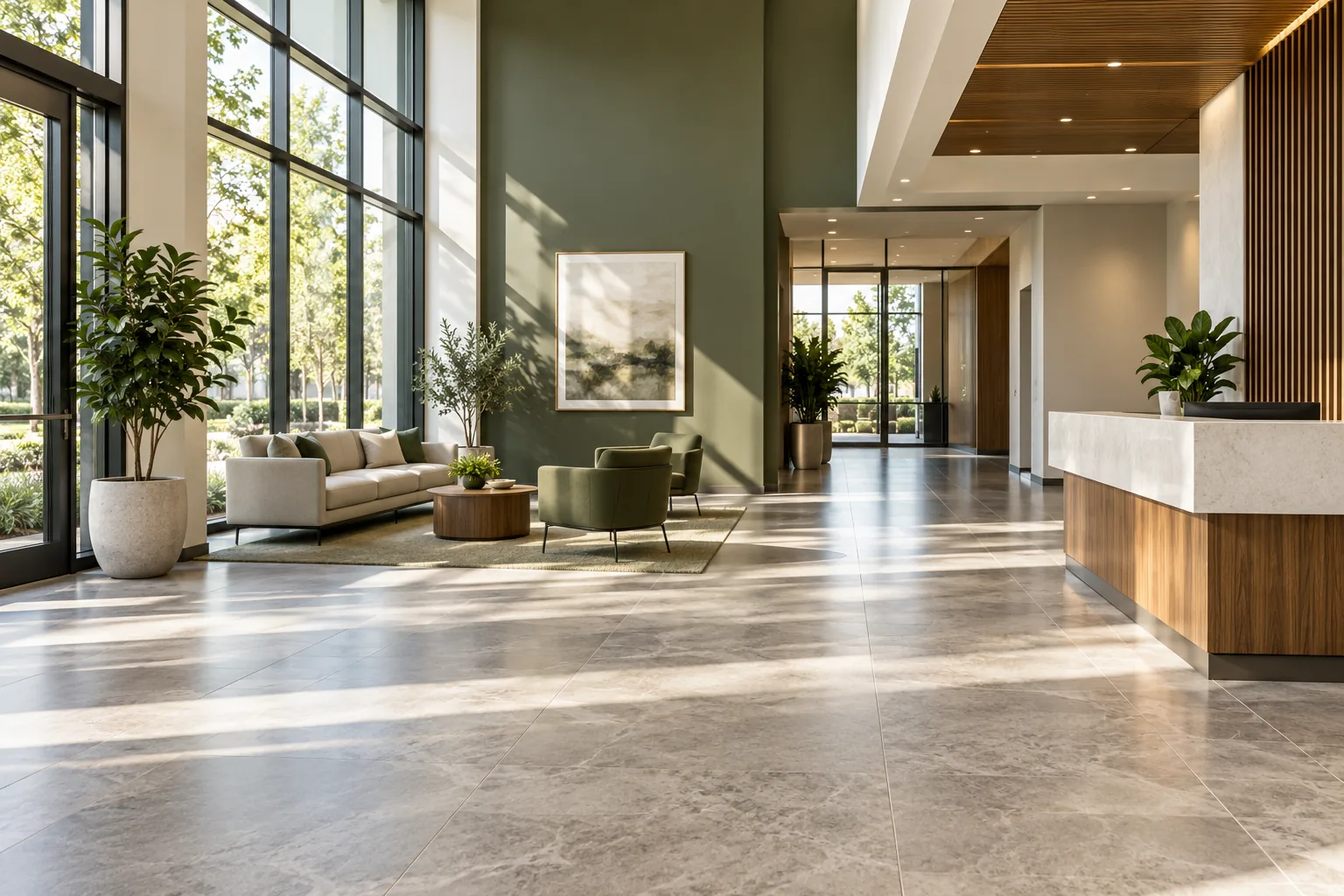
The lobby is where families form their first impression. Entry glass, the reception desk, waiting chairs and the visitor restroom are cleaned and stocked each visit, while counselor offices get desks wiped where clear, phones and keyboards cleaned, carpets vacuumed and trash removed. Our medical and dental office routine covers on-site clinic suites, and commercial floor care refreshes worn dining and hallway floors.
Price follows the building and the program: square footage, the number of resident rooms and showers, visits per week, the disinfection steps your protocol requires, terminal cleans and any daytime porter hours. A walkthrough with your program director gives you a quote built for your facility.
A few useful answers
Common questions.
Can bedrooms be cleaned while residents are living on site?
Yes. Bedrooms are cleaned while residents are in programming, and their belongings stay exactly where they are.
Which disinfectants will the crew use in our program?
The EPA-registered products your protocol approves, each left on the surface for the full dwell time on its label.
Do you offer terminal cleaning between admissions?
Yes. A terminal clean takes the room from high surfaces down to the floor, leaving it set for the next resident.
What keeps resident information private while your crew is on site?
With HIPAA-aware conduct: records and sign-in logs are never handled, and nothing seen inside the building is repeated.