
Industries
Hotels and event venues ready for the next arrival.
Lobbies, ballrooms, meeting rooms, public restrooms and back-of-house spaces cleaned between check-ins, banquets and load-outs across the Bay Area and Sacramento.
Printable checklist
What a hospitality plan covers.
A hotel never fully closes, and an event venue can go from empty to a thousand guests and back again in a single day. Fieldstone builds the plan around both rhythms: the lobby and public restrooms that guests use around the clock, the meeting and banquet rooms that turn over between bookings, and the back-of-house corridors, break rooms and offices that keep your staff moving.
Each space is written into the plan with its own timing. Front-of-house areas are cleaned in the quiet hours after midnight, function rooms follow the event calendar, and staff areas get a steady nightly visit. When your sales office books a new event, the cleaning schedule shifts with it.
Where the region gathers.
Convention districts in San Francisco, San Jose, Santa Clara and Sacramento fill the hotels, banquet halls, restaurants and smaller event spaces around them.
A hospitality plan fits boutique hotels, conference hotels, banquet halls and wedding venues alike.
Lobbies and public restrooms, around the clock.
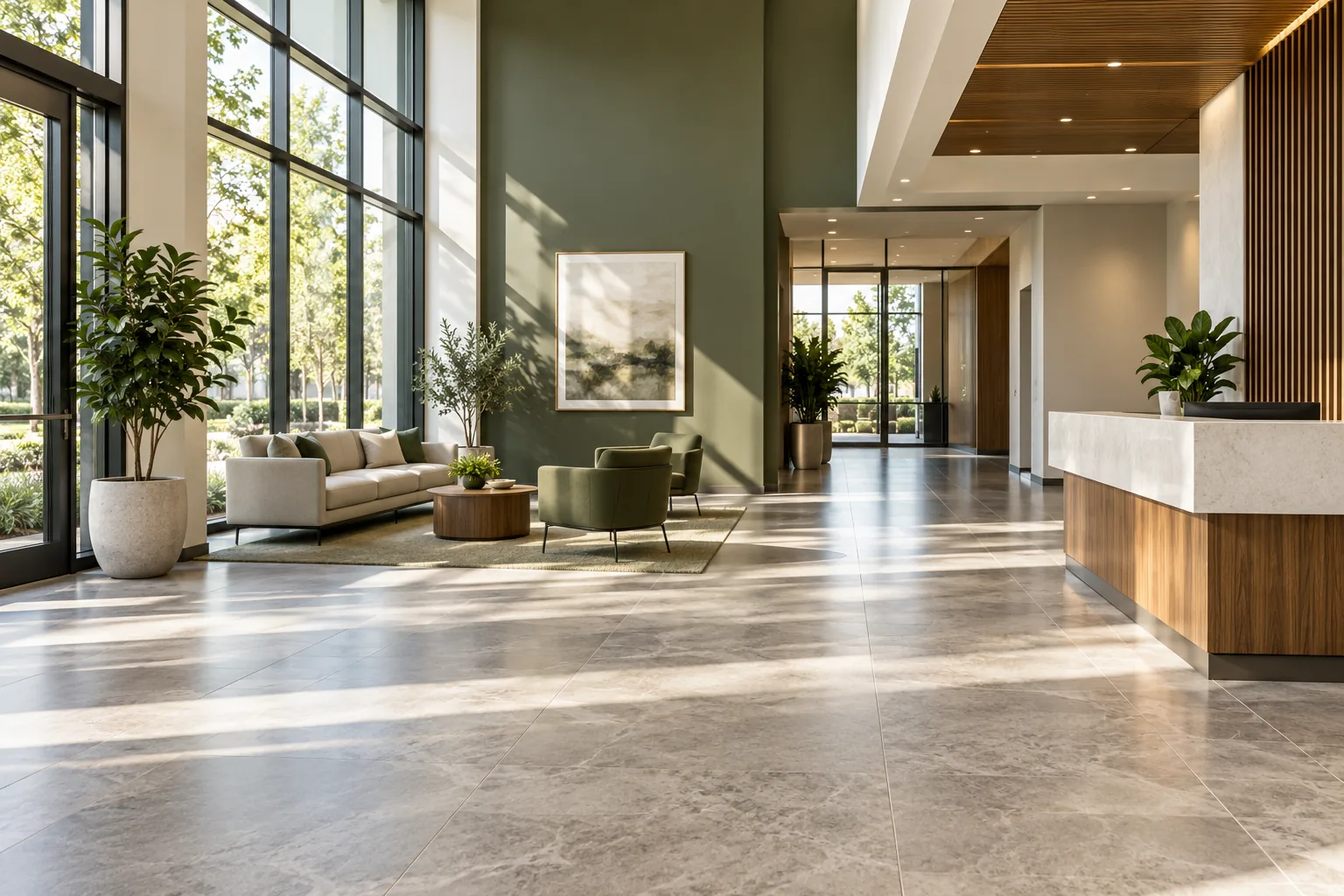
Guests size up a property at the front door. Overnight crews work the lobby in sections so the entrance never has to close: entry glass and door hardware, the front desk face and counters, lounge seating, elevator landings and the public restrooms just off the lobby. Entry tile and stone are scrubbed and burnished on a floor care cycle, so the shine holds up under rolling luggage.
Through daylight hours, a day porter keeps pace with what guests leave behind: restrooms restocked, smudges off the glass, the coffee station wiped and bins emptied well before they overflow. Busy check-in afternoons and conference breaks are where porter hours pay for themselves. Door pulls, elevator buttons and restroom fixtures also go on a disinfection route that the night crew works through on every visit.
Ballrooms, meeting rooms and the turn between events.
An event venue is cleaned in turns. After a banquet or a conference day, the crew moves in once your staff have struck the tables: carpet vacuumed wall to wall, spills spotted, chair rows and stage edges dusted, pre-function corridors and coat check reset, and the nearby restrooms brought back to full. The room is ready when the next setup crew arrives in the morning.
Ballroom and corridor carpet takes heavy traffic in concentrated bursts. Hot-water carpet extraction goes on the calendar in the gaps between bookings, leaving time to dry before the next load-in. Dance floors, tile foyers and marble or terrazzo entries get their own care, including natural stone cleaning and polishing.
Multi-day conferences and festival weekends bring back-to-back days. Crews follow the run of show, with a reset after each session and a deeper clean once the last guest has gone.
Back of house keeps the front running.
Staff break rooms, locker rooms, the employee entrance, sales and administrative offices, service corridors and the loading dock see as much traffic as the lobby, only from a different crowd. They sit in the same plan with their own frequency, so staff kitchens and restrooms stay in shape for every shift change.
Our cleaners are background checked before they are given keys or a badge, and supervisors carry out quality inspections that walk the same spaces your guests and staff see. Fieldstone carries insurance and workers’ compensation coverage, and each client gets a copy of our certificate of insurance for its records.
Refreshes, renovations and new outlets.
Properties refresh constantly: a floor of rooms gets new carpet, a ballroom gets new lighting, a lobby bar is rebuilt. Construction dust drifts well past the work area. Post-construction cleaning takes those spaces from the contractor’s final punch list to guest-ready, covering vents, ledges, glass, fixtures and floors, timed so the space can reopen on the date your revenue team has already sold.
What sets the price for a hotel or venue.
Hospitality cleaning is priced from the walkthrough. The size of the public areas, the number of restrooms, how many events run each week and the overnight hours a crew can work all shape the figure. A venue with frequent turnovers needs more crew hours than a hotel with one steady lobby.
Porter hours, ballroom carpet extraction and stone floor work appear as their own lines in the written plan, so you can see each part of the cost. Our guide to what drives commercial cleaning cost covers the rest.
A few useful answers
Common questions.
Can the ballroom be turned overnight between a wedding and a morning conference?
Yes. The crew starts once your banquet team has cleared the tables and leaves the room vacuumed, spotted and ready for the morning setup.
How do you handle a venue that hosts events several days in a row?
Each night ends with a reset of the rooms, restrooms and corridors in use. Deeper work such as carpet extraction waits for the first open day after the event.
Can a porter cover the lobby through afternoon check-in?
Yes. A day porter keeps the lobby restrooms, entry glass, seating and coffee station in order through the busiest arrival hours.
Can the marble or terrazzo in our lobby be polished?
Yes. Natural stone is cleaned and polished on a schedule set around your quietest nights, so guests walk across a finished floor in the morning.
Can back-of-house areas be cleaned while the hotel is full?
Yes. Staff corridors, break rooms and the loading dock are cleaned in the quiet hours after the evening shift change, so service carries on around the crew.