01 / Floors
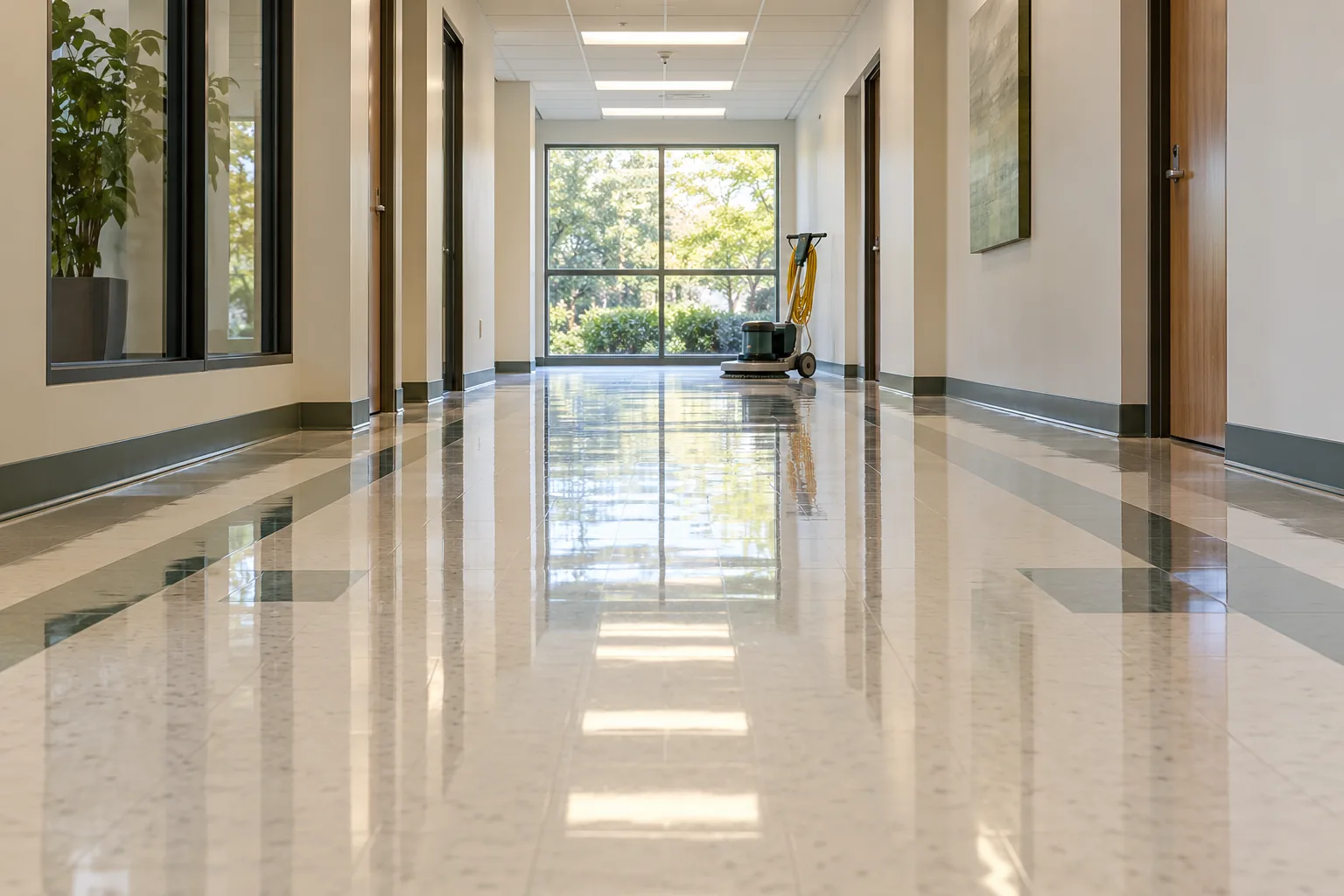
Commercial floor care
Scrubbing, burnishing, stripping and refinishing for hard floors that take real traffic.
View details
Guide
Floors tell you when they need more than nightly care. Here’s how to read them, floor by floor.
Sweeping, dust mopping, damp mopping and vacuuming keep floors clean from day to day. They don’t restore a worn finish or pull ground-in soil out of carpet. Over time, every floor in a busy building needs heavier work, and the trick is doing it before the floor starts to look old.
The schedule comes down to traffic and floor type. An entrance that takes a few hundred people a day will show wear months before a back office does, so each area gets its own timing.
Vinyl composition tile, the tile in many offices, schools and stores, wears a protective finish. Regular burnishing keeps that finish glossy. When burnishing no longer brings the shine back, or you can see a dull path where people walk, the finish has worn thin.
That is the time to strip and refinish. The old finish comes off, the tile is cleaned down to the surface and fresh coats are laid on. Busy corridors and entrances often need it once or twice a year; quiet rooms can go much longer. Waiting too long lets dirt grind into the tile itself, which no finish can fully hide.
Ceramic and porcelain tile don’t take a finish, so the signal is the grout. When the grout lines turn darker than the tile, especially in restrooms, kitchens and entries, it’s time for a deep scrub. Machine scrubbing lifts the soil that a mop pushes into the grout instead of out of it.
Concrete looks indestructible, which is why it gets neglected. In a warehouse, showroom or loft office, tire marks, dust and spills build into a dull, blotchy surface. When dust mopping no longer evens out the color, or the busy lanes stay darker than the edges, the floor is due for a deep machine scrub.
Carpet gives you three warnings. The first is color: a walkway that reads a shade darker than the rest of the room even right after vacuuming. The second is texture: pile that feels flat and matted underfoot. The third is the stain that comes back a few days after it was spot cleaned.
All three mean soil has worked down below what a vacuum reaches, and that is the moment for hot-water extraction. Busy offices tend to book it a few times a year and clean the main walkways in between, while quieter rooms can wait longer.
Heavy floor work and people don’t mix. A stripped floor is slippery until the new finish is down, fresh finish needs hours to cure, and extracted carpet needs time to dry. So the work goes on your calendar when the rooms are empty.
Every kind of building has its own natural window. Schools use summer break, churches the days between weekend services, retailers the weeks before a busy season and offices a long weekend. Clearing chairs, mats and small furniture from the area ahead of time lets the crew get straight to work.
During the walkthrough, we identify each floor type, look at the wear and ask about your traffic. The written plan sets a cycle for each area: burnishing, refinishing, scrubbing or extraction, with dates that fit around your hours. Nightly crews then keep the floors protected between visits.
A few useful answers
Yes. We plan the order so carpet dries while hard floors are finished.
Light foot traffic is usually fine a few hours after the last coat, with furniture and full traffic back the next day. Extracted carpet is usually dry in a few hours, which is why both are booked for evenings and weekends.
Yes. Starting a cycle early protects the finish and keeps a new floor looking new.
A deep machine scrub lifts the tire marks and ground-in dust, and a regular scrubbing cycle after that keeps the lanes even in color.
Resources
Services
01 / Floors
Scrubbing, burnishing, stripping and refinishing for hard floors that take real traffic.
View details02 / Carpet
Hot-water extraction and spot treatment that lift traffic lanes and stains.
View details