
Resources
What a day porter does through a shift, from opening to hand-off
A day porter’s work follows the building’s traffic, not one pass through a checklist. Here is how a typical shift breaks down, from the first lobby check to the note for the night crew.
A shift shaped by traffic.
A nightly crew works through an empty building in a set order. A porter works through a full one, and the order changes with the people in it. The duties repeat in loops: the same restrooms, entrances and break areas visited again and again, with tighter loops when the building is busy and wider ones when it is quiet. That is why porter duty lists are usually written by part of the day rather than as one long checklist.
Shifts commonly run through business hours, starting a little before the doors open, though coverage can just as well be limited to the busiest stretch, such as early morning through the lunch hour. The outline below follows a full day in a busy office building. A medical office, a shopping center or a school runs the same pattern with different peaks. If you are still weighing whether you need a porter at all, start with day porter or nightly janitorial.
Before the doors open.
The first job is a lap of the building to see how the night left it. The porter checks each restroom, tops up any dispenser that is running short, and looks for anything that came up overnight: a leaking faucet, a burned-out light, a jammed stall door. Maintenance issues get reported to the building contact rather than left for someone to stumble on.
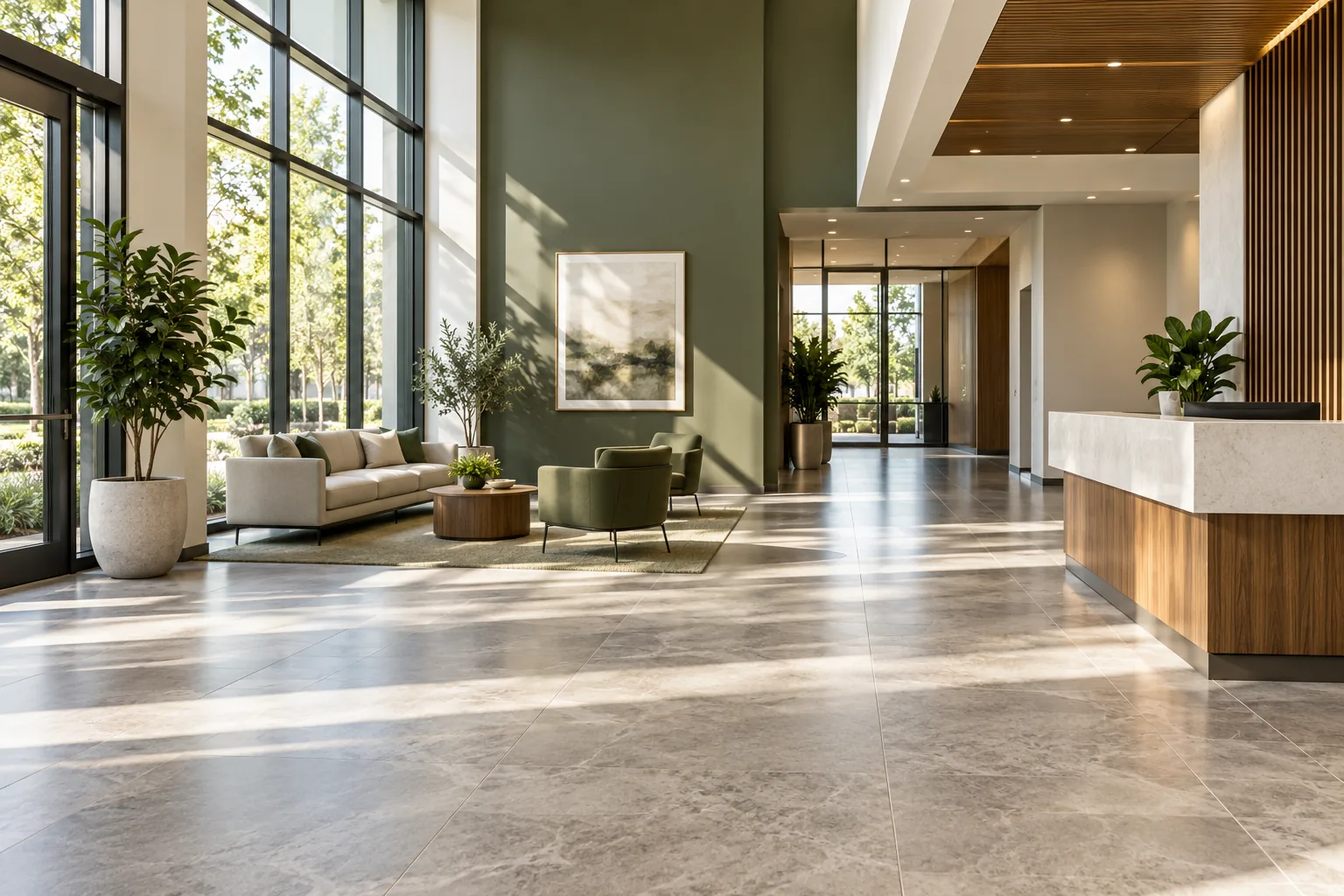
Then the entrances. Walk-off mats go down flat and square, the glass on the front doors gets a once-over for fingerprints, and in wet weather a second mat and a caution sign go out before the first umbrellas arrive. The lobby, the elevator landings and the main corridor get a quick sweep or dust mop. By the time the front desk opens, the route a visitor takes from the door to the elevator should look the way the night crew left it.
Mid-morning rounds.
Once people settle in, the porter moves to set rounds. A typical loop covers every restroom on the assigned floors, the break areas, the copy and mail rooms and the lobby, with a fixed time to start each pass. In a busy building, restrooms near the main entrance or a large open office often get checked every hour or so, and quieter ones once or twice before lunch.
Each restroom stop is short and the same every time:
- restock tissue, towels and soap
- wipe the counters and mirrors that collect splashes
- collect dropped paper and look under each stall
- empty bins that are more than about two-thirds full
- spot mop wet patches near sinks and urinals
Between loops, the porter resets meeting rooms after early meetings: cups and plates cleared, tables wiped, chairs pushed in, whiteboards left as the room’s users ask. Spills come first whenever they happen. A coffee puddle by the elevator is a slip risk and a stain in the making, so it moves to the top of the list.
The lunch rush.
Midday is the porter’s peak. Break rooms and kitchens fill up, bins overflow fast and the sink collects dishes. During the lunch hour the porter stays close to those spaces, wiping tables between groups, clearing counters, emptying trash and recycling before it spills over, and wiping microwave doors and fridge handles that every hand touches. In buildings with a food court or a large cafeteria, this stretch often needs a second porter.
Restroom traffic peaks at the same time, so the restroom loop tightens. A stall that runs out of paper at half past twelve gets a lot of complaints before one o’clock. Porters usually carry extra rolls and towels on the cart during this window so a restock doesn’t mean a trip back to the closet.
Afternoon catch-up.
After lunch the building calms, and the porter gets to the tasks that don’t fit a busy hour. Break rooms get a full reset. Entry glass gets a second pass. Elevator cabs get their buttons, rails and doors wiped. Cardboard from deliveries is broken down and taken out, and recycling bins in the copy room are emptied. Conference rooms booked for afternoon meetings get checked before each one starts.
This is also the time for small detail work that keeps a building from looking tired: wiping scuffs off doors, dusting the reception desk and lobby furniture, clearing cobwebs from corners in the entry. None of it is deep cleaning, but it carries the building through to evening without the slow drift that shows by late afternoon.
Closing out and handing off.
The last loop of the day goes back through the restrooms and break rooms so the building ends the day stocked and presentable. Then the porter writes up a brief hand-off for the evening crew: what ran low, which carpet spot needs extraction rather than blotting, which room had a spill that needs a proper clean, and anything reported to maintenance. That note is what keeps the day and night work from doubling up or leaving gaps.
A good hand-off also works in the other direction. When the night crew notes something for the morning, such as a dispenser that won’t latch or a room that was locked, the porter checks it on the first lap and reports back.
Writing a porter duty list for your building.
Start with your building’s busy hours and its hard spots: the restroom that runs out first, the kitchen that piles up at noon, the entry that takes the rain. Build the rounds around those, then decide who can call the porter for one-off needs and how, whether by phone, radio or a request to the front desk. Put the list in writing with times for each loop so everyone knows what the porter is doing at any hour. Revisit the list after the first month, once you have seen which loops run long and which spaces stay tidy on their own.
A Fieldstone day porter follows rounds set in your written plan, covering restrooms, entrances, break rooms, trash and spills, and the person you name on site can redirect the porter when something comes up. The porter and the evening crew work from the same plan, so the hand-off stays clean. Day porter services has the details, and you can request a quote to plan coverage for your busiest hours.
A few useful answers
Common questions.
How often should a porter check a busy restroom?
In a busy office or retail building, roughly every hour, with tighter checks over lunch. Quieter restrooms on upper floors are usually fine with two or three checks spread through the day.
Can one porter cover a multi-floor building?
Often, yes, when the rounds are planned floor by floor and the busiest spaces sit on the main loop. Buildings with a large cafeteria, heavy visitor traffic or several entrances tend to add a second porter at peak times.
How do we reach the porter when something spills?
Set one channel and stick to it: a mobile number, a radio or a call to the front desk that gets passed along. Spills move to the front of the porter’s list, so the faster they hear about it, the better.
Does a porter replace the nightly cleaning?
No. A porter keeps the building presentable while it is busy, and the night crew still does the full clean once people leave. The two work best from one plan with a daily hand-off note.
Can a Fieldstone porter cover only part of the day?
Yes. Porter hours can be limited to the morning rush and the lunch period, or to your busiest weekdays, and the hours can grow if the building gets busier.