
Industries
Aircraft hangars kept bright, clear and ready for the next job
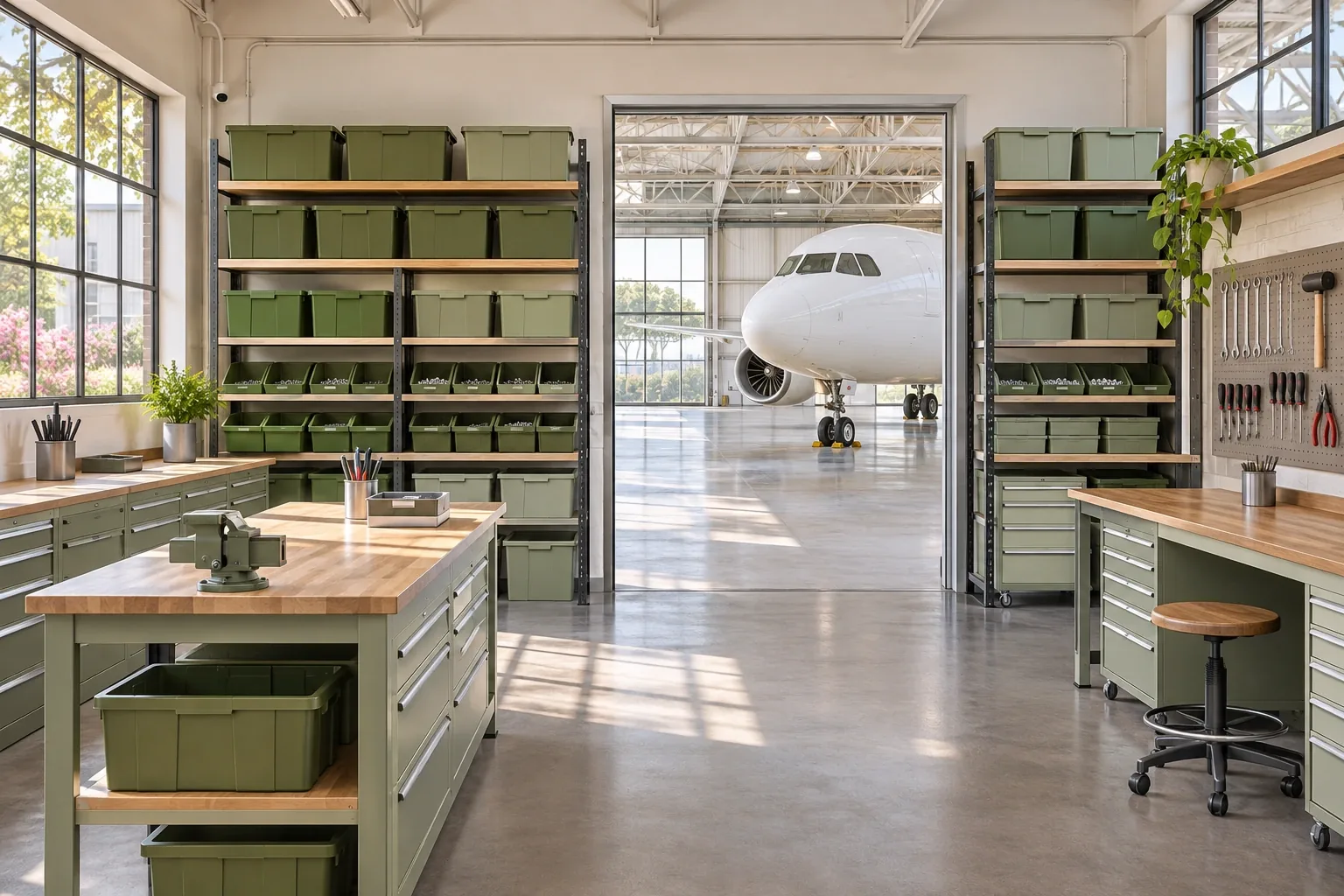
Hangar cleaning in the Bay Area and the Sacramento region: maintenance bays, shops, crew rooms and hangar offices, with every visit run the way the hangar operator directs.
Hangar cleaning for the people who run the building
Fieldstone cleans aircraft hangars and aerospace maintenance buildings across the Bay Area and the Sacramento region: the bay floor, the shops and parts rooms, crew rooms, restrooms and the offices upstairs. The hangar operator sets the rules for where crews go, when, and with what water and products, and every visit follows them.
Hangar managers, maintenance directors and facility teams get a cleaner that fits around aircraft, technicians and fire protection systems instead of getting in their way.
The cleaning map for a hangar
| Space | Routine work | Set by |
|---|---|---|
| Maintenance bay floor | Dust mopping, sweeping and auto-scrubbing of open floor, with spills reported to your team | The operator releases zones around aircraft and ground equipment |
| Door line and hangar apron edge | Sweeping of grit, packaging and wrappers before they blow outside | Ramp and airfield access follows the airport’s rules |
| Shops, tool cribs and parts rooms | Floors swept and mopped, bins emptied, cleared benches wiped | Tools, hardware and work in progress stay where technicians left them |
| Crew rooms, break rooms and locker rooms | Tables, counters, sinks, appliances and floors cleaned; paper and soap restocked | Shift change times |
| Restrooms | Fixtures cleaned and disinfected, dispensers filled, floors mopped | Traffic and shift pattern |
| Offices, planning and training rooms | Dusting, vacuuming, trash, glass and touch points | Office hours |
| Trusses, light fixtures and ductwork | High dusting from lifts, section by section | The operator clears or covers the floor below |
Restroom paper, liners and soap can come from our janitorial supplies service or from your own stockroom. Hangar offices follow the same nightly routine as our office cleaning.
Why the bay floor gets so much attention
A clean, light floor is a working tool in a hangar. Military hangar design criteria (UFC 4-211-01) call for a light-colored, reflective floor in the maintenance bay because it contrasts with dropped parts and debris, makes them easier to find and bounces light up under wings and fuselage. The same criteria note that sand and dirt left on a finish act as an abrasive and dull it, and that bare concrete is porous and soaks up fuel and hydraulic fluid spills.
So the bay gets steady dry work first, then machine scrubbing in the lanes the operator opens. Sealed concrete, polished concrete and epoxy floors each wear differently, and the operator’s protocol names the cleaner and pad for its own finish. Heavier periodic work runs through our commercial floor care crews.
Loose debris, FOD bins and clean-as-you-go
The FAA defines foreign object debris, or FOD, as any object in the wrong place in the airport environment that could injure people or damage aircraft. Its FOD advisory circular (AC 150/5210-24A, February 2024) is guidance rather than regulation, and it suggests FOD containers in hangars and maintenance areas and a clean-as-you-go habit: tidying your surroundings before, during and after a shift.
Cleaning supports that habit. Crews empty the FOD containers on the plan, keep cardboard, plastic wrap and paper bagged and tied, and sweep the door line so light trash does not drift onto the ramp, where the AC notes it can collect and blow back. The AC also says the parties at a site should agree in writing who cleans which areas, and our plan lists every area by name so nothing falls between crews.
Foam systems and fire equipment
Hangars are built and protected under NFPA 409, the Standard on Aircraft Hangars, which covers their foam and fire suppression systems. Looking after those systems, from inspections to tests, is the job of the hangar owner and its fire protection contractor.
Crews keep clear of detectors, nozzles, monitors, pull stations and control panels, and never touch, test, reset or block any of it. The stakes are real: in surveys summarized by the Fire Protection Research Foundation (January 2022), 357 of 432 hangar foam discharges were accidental. When the owner gives notice of a system test, the visit moves to other areas or another night.
Spills, drains and where the water goes
EPA guidance for air transportation facilities recommends cleaning spills with dry absorbents instead of large amounts of water, not hosing areas down, and never pouring liquid waste into floor drains, sinks or storm drains. California’s Industrial General Permit lists the non-storm water discharges it allows, and washwater is not among them.
Crews work with that in mind. Scrubbing uses only as much water as the floor needs, dirty scrubber water is emptied only where the hangar operator directs, and sweepings stay out of trench grates. Fuel or fluid on the floor is reported to your team for handling under your spill procedure. Floor drains, trench drains and oil-water separators stay with your maintenance staff.
Overhead dusting in a tall bay
Dust settles on trusses, light fixtures and ductwork high above the bay, and Fieldstone handles it with high dusting from lifts. Each section is planned with the operator, who decides whether aircraft move out or the floor below is cleared and covered.
OSHA’s rule for vehicle-mounted aerial lifts (29 CFR 1910.67) requires any employer to test lift controls each day before use, keep workers on the basket floor with harness-based fall protection attached to the boom or basket, and never tie off to the building. Where people could be struck by falling objects, OSHA’s fall protection rule (29 CFR 1910.28) calls for protections such as a barricaded area kept clear below. Lift work is scheduled so the zone under the basket can be closed off.
Hangars on the airfield
A hangar that opens onto a ramp sits inside the airport’s security program. The air operations area (AOA) and the security identification display area (SIDA) are each defined by the airport’s own program, so their edges differ from one field to the next. The airport operator decides who receives unescorted access after a fingerprint-based background check and security training, and anyone without it is escorted.
Fieldstone’s cleaners are background-checked, and airfield access still follows the airport’s process for every person. Terminal and airport support buildings are covered on our airport cleaning page.
Visits that fit the maintenance schedule
Hangar work rarely stops, so the plan follows it. Offices and crew rooms can be cleaned nightly, the bay floor in the quiet hours between scheduled maintenance, and high dusting during a planned gap when aircraft are out. OSHA’s walking-working surfaces rule (29 CFR 1910.22) expects floors kept clean and, as far as feasible, dry, which shapes when wet scrubbing happens near active work.
We serve hangar and aerospace buildings throughout our area, from San Jose and Hayward to Sacramento. Shops and parts storage that look more like a warehouse share methods with our industrial and warehouse cleaning, and a new hangar or office fit-out can start with post-construction cleaning.
Request a hangar cleaning quote
Crews are background-checked and supervisors inspect their work. Fieldstone is insured, bonded and covered by workers’ compensation, and sends a certificate of insurance for your vendor file. The quote comes from bay size, shop and office square footage, visit frequency, lift work, escort steps and your shift pattern. Book a walkthrough and we will build a plan around your aircraft schedule.
A few useful answers
Common questions
What happens to a scheduled visit when the foam system is being tested?
The visit moves. When your fire protection contractor gives notice of a test, crews work in the offices and shops or come back another night, and the bay waits until the system is back in normal service.
Can the bay be scrubbed with aircraft parked inside?
Yes, in the lanes your team releases. Crews scrub the open floor around parked aircraft and ground equipment, keep a working distance from both and leave any zone you have not opened for a later visit.
Who empties the FOD containers?
Our crew does, for every container listed in the cleaning plan. The plan names each area of the hangar and who cleans it, so bins, door lines and shop floors all have an owner.
How do you dust the trusses and lights above the bay?
From lifts, one section at a time. Your team decides whether aircraft move out or the floor below is cleared and covered, and the area under the basket is closed off while the work is overhead.
Can the offices be cleaned nightly and the bay less often?
Yes. Offices, crew rooms and restrooms usually run on a nightly or weekday routine, and the bay floor, high dusting and periodic floor work follow a separate rotation set around your maintenance schedule.