Industries
Airport terminals and support buildings cleaned under the airport’s own rules
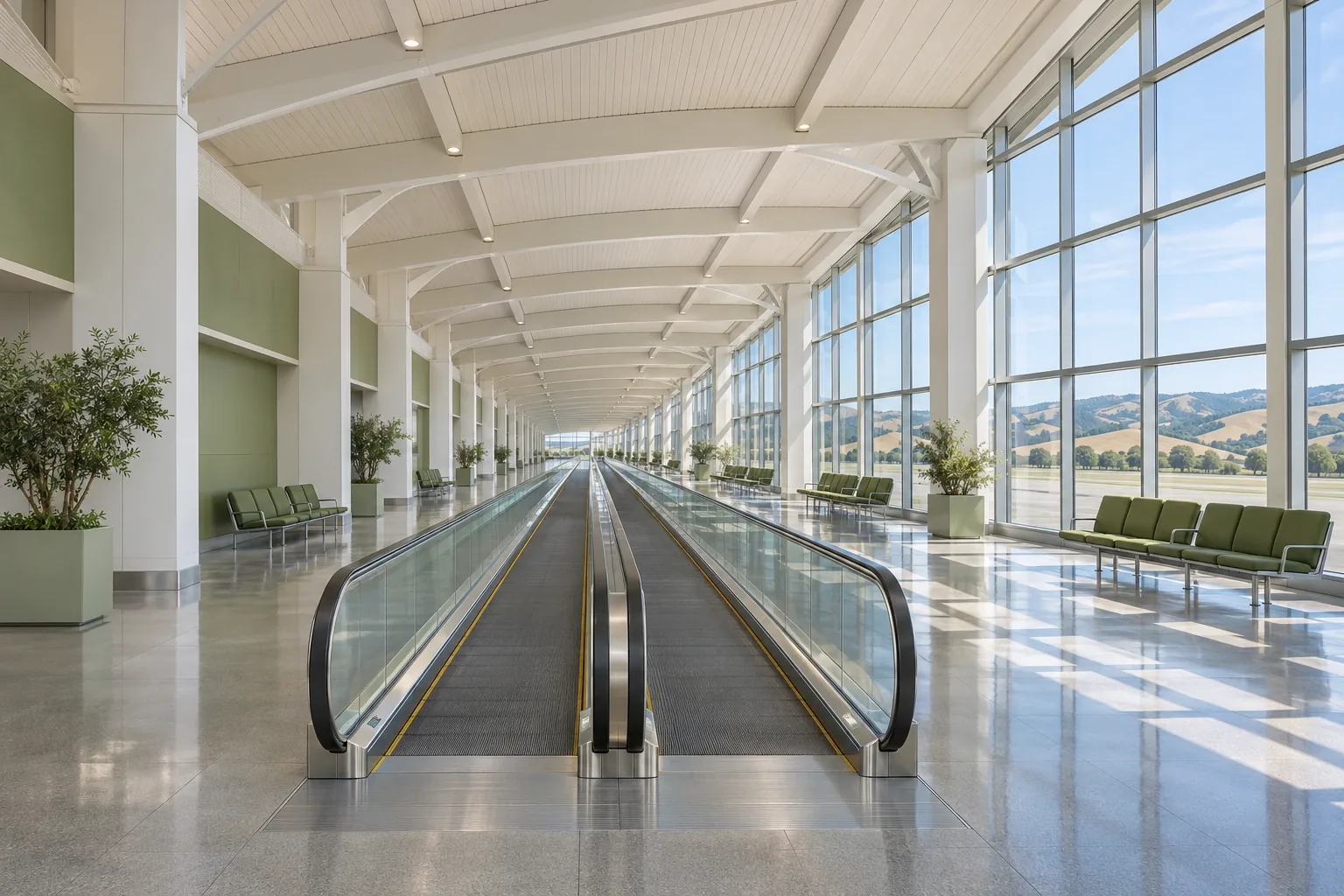
Airport cleaning in the Bay Area and the Sacramento region: terminal restrooms and concourses, airport offices, cargo and support buildings, with access, escorts and hours set by the airport operator.
Cleaning for terminals, airport offices and support buildings
Fieldstone provides janitorial service for airport buildings across the Bay Area and the Sacramento region: passenger terminals and concourses, airport administration offices, tenant spaces, and cargo and maintenance support buildings. The airport operator’s rules decide who may work where and when, and the cleaning plan is written around them.
Airport operations and facility managers can book it, and so can tenants who run space inside an airport, from airline offices to concession back rooms. Fieldstone serves airport buildings across the Bay Area and the Sacramento region, from San Francisco, San Mateo, Oakland and San Jose to Sacramento.
What the plan covers, building by building
| Building or area | Cleaning on the plan | What shapes the timing |
|---|---|---|
| Terminal restrooms | Fixtures cleaned and disinfected, dispensers filled, floors mopped, odors traced | Passenger peaks and the airport’s hours |
| Concourses, gate seating and ticket lobbies | Floors swept, mopped or scrubbed, seating wiped, glass and touch points cleaned, trash emptied | Flight banks and checkpoint opening |
| Airport offices and operations rooms | Dusting, vacuuming, kitchens, restrooms and trash | Office hours and shift handovers |
| Tenant spaces | The tenant’s own task list, cleaned to the tenant’s and the airport’s rules | The tenant’s lease area and access rules |
| Cargo and support buildings | Warehouse and dock floors, restrooms, and the break and locker rooms | Freight and maintenance shifts |
| Service animal relief areas | Cleaned on the schedule the airport sets | The airport’s maintenance plan |
Restrooms carry most of the pressure in a terminal. Our restroom deep cleaning adds weekly, monthly and quarterly work on top of the daily routine, with EPA-registered disinfectants kept wet through the full contact time on the label. Cargo floors and docks follow our industrial and warehouse cleaning methods.
Secured areas, the SIDA and the AOA
Federal rules (49 CFR part 1542) require airports that serve regulated airlines to run a security program, and that program draws the lines. The secured area is where passengers board and bags are sorted and loaded; the security identification display area (SIDA) is where TSA-required measures apply; the air operations area (AOA) covers ramps, aircraft parking and movement areas; and the sterile area is the passenger side past screening. Each airport defines its own boundaries, so the map differs from one airport to the next.
A tenant can take on security measures for its own leased space under a TSA-approved tenant program, but never for the passenger terminal itself. For cleaning, that means the tenant’s wishes and the airport’s rules both apply.
How cleaning crews get access
Badges come from the airport, not from the cleaning company. Before anyone is given unescorted access to a SIDA, the airport operator confirms their identity with two forms of ID and runs a fingerprint-based criminal history records check, and the person completes security training covering badge display, escort and challenge procedures and their own responsibilities.
Inside the secured area or SIDA, a badge is worn on the outer garment above the waist at all times, or the person is under escort by someone with unescorted access authority who keeps them in view. Fieldstone’s cleaners are background-checked as a company practice, and each person still goes through the airport’s own process. Scheduling, crew lists and escort needs are settled with your security coordinator before the first visit.
Trash that stays off the ramp
The FAA’s FOD advisory circular (AC 150/5210-24A, February 2024) is guidance rather than regulation, but it sets out a four-part approach: prevention, detection, removal and evaluation. It says everyone with AOA access, cleaning staff and other contractors included, should understand their part in prevention, and that orientation should cover FOD. The everyday culprits it names include paper, plastic, cans, pens, luggage tags and catering supplies.
In a terminal, prevention starts with the bins. Crews tie bags before they leave the can, keep loads covered on the way to compactors and dumpsters, and empty outdoor containers before wind can lift what is inside. Agreements on which party cleans which apron or baggage area come from the airport and its tenants, and the plan follows them.
Accessible features that stay usable
Under the ADA rules for public entities and public accommodations (28 CFR 35.133 and 36.211), accessible features must be kept in working order, with brief interruptions for maintenance allowed. DOT rules (49 CFR 27.71) also require airports with 10,000 or more annual enplanements to provide at least one accessible service animal relief area in each terminal, generally past security.
Crews clean accessible stalls and routes without leaving carts, signs or wet floors blocking them longer than the task takes, and relief areas are cleaned on the schedule the airport sets.
Porters by day, deeper work overnight
A terminal never looks the same twice in a day. Day porters can cover restrooms, spills and trash through the busiest banks of flights, while nightly crews take on floor scrubbing, glass and heavier restroom work in the hours the airport makes available. Airport offices follow our office cleaning routine, and periodic floor work runs through commercial floor care.
Get a quote for airport cleaning
Our insurance, bonding and workers’ compensation are in place, a certificate of insurance goes to your file, and supervisors inspect the work. The quote comes from the buildings and square footage, restroom count, porter hours, the overnight window, and escort and badging steps. Request a quote and we will walk the buildings with your operations team.
A few useful answers
Common questions
Does the airport or Fieldstone issue crew ID badges?
The airport operator issues them. Each cleaner goes through the airport’s identity check, fingerprint-based background check and security training before unescorted access, and anyone still waiting works under escort as the airport allows.
Can you clean a tenant’s leased space inside the terminal?
Yes. The tenant decides what gets cleaned in its own space, and the airport’s security and access rules apply on top, so the plan is settled with both before work starts.
Which airport buildings besides the terminal can be on the plan?
Administration and operations offices, cargo warehouses and docks, maintenance support buildings, break rooms and locker rooms. Hangars have their own page and plan.
Can a porter cover restrooms while flights are boarding?
Yes. A day porter can circle the restrooms near busy gates, restock paper and soap, catch spills and keep trash moving during peak hours, with deeper work saved for the overnight crew.
How do you keep terminal trash from blowing onto the airfield?
Bags are tied before they leave each can, loads stay covered on the way to compactors, and outdoor bins are emptied on a schedule so wind has nothing loose to pick up.